


When you cut your finger or catch a cold, inflammation is your friend. Your immune system rushes in, fights the threat, repairs the damage, and then switches off.
But as we age, many of us develop a different kind of inflammation: low-grade, constant and largely silent. It doesn’t cause redness or swelling you can see. Instead, it simmers in the background for years, gradually wearing down tissues and organs. Scientists have a name for it: inflammaging.
Table of Contents
What is inflammaging?
The term was coined in 2000 by Italian researcher Claudio Franceschi to describe the chronic, low-level inflammation that tends to rise with age. It’s now recognized as one of the core biological processes of aging.
Inflammaging is linked to many of the conditions we associate with getting older:
- Heart disease and stroke
- Type 2 diabetes and insulin resistance
- Alzheimer’s disease and cognitive decline
- Osteoporosis and sarcopenia (age-related muscle loss)
- Arthritis
- Some cancers
- Frailty and loss of independence
- Depression
It isn’t inevitable, and it doesn’t progress at the same speed for everyone. Two people of the same age can have very different levels of inflammation, largely because of how they live.
What drives it?
Several things feed the fire:
- Visceral fat. Fat stored deep around the abdominal organs is metabolically active and releases inflammatory signals.
- Senescent cells. Sometimes called “zombie cells,” these are old or damaged cells that stop dividing but don’t die. They release a cocktail of inflammatory molecules that affect the tissues around them. They accumulate with age.
- Insulin resistance and high blood sugar, which both fuel and are fuelled by inflammation.
- Poor sleep and sleep apnea.
- Physical inactivity and muscle loss. Muscle that’s used releases anti-inflammatory signals; inactivity does the opposite.
- An imbalanced gut microbiome and a “leaky” gut lining.
- Ultra-processed diets high in refined carbohydrates, sugar and certain fats, and low in fibre and plants.
- Smoking and excess alcohol.
- Chronic stress and social isolation.
- Gum disease and other persistent low-grade infections.
- Hormonal changes, including menopause and low testosterone.
How do you measure it?
There isn’t a single perfect test for inflammaging, but several markers give useful clues.
High-sensitivity C-reactive protein (hs-CRP)
This is the most widely used blood test for low-grade inflammation, and it’s a recognized marker of cardiovascular risk. As a general guide:
- Under 1 mg/L: lower risk
- 1 to 3 mg/L: average risk
- Over 3 mg/L: higher risk
CRP rises sharply with infections or injuries, so a single high result should be repeated when you’re well. A level over 10 mg/L usually points to an acute problem rather than inflammaging.
Other helpful markers
- Fasting insulin, HbA1c and glucose: to look for insulin resistance
- Lipid panel, including triglycerides, and often ApoB
- Ferritin: an iron-storage protein that can also rise with inflammation
- Liver enzymes: to screen for fatty liver
- White blood cell count
- Homocysteine in some cases
- Waist circumference and body composition, especially visceral fat
- Blood pressure
Research labs also measure markers such as interleukin-6 (IL-6) and TNF-alpha, and newer “biological age” tests are emerging. These are interesting but not yet standard for routine care.
The most useful approach is to look at these results together, alongside your symptoms, sleep, lifestyle and family history.
Does lowering inflammation actually matter?
Yes. A landmark trial called CANTOS showed that lowering inflammation with a targeted medication reduced heart attacks and strokes in high-risk patients, even without changing cholesterol. That was strong evidence that inflammation itself drives disease, not just reflects it. Since then, a low-dose anti-inflammatory medication has been approved in the US to help reduce cardiovascular risk in certain patients.
For most people, though, the most powerful anti-inflammatory tools are in daily life.
How to lower inflammaging
Eat a Mediterranean-style diet
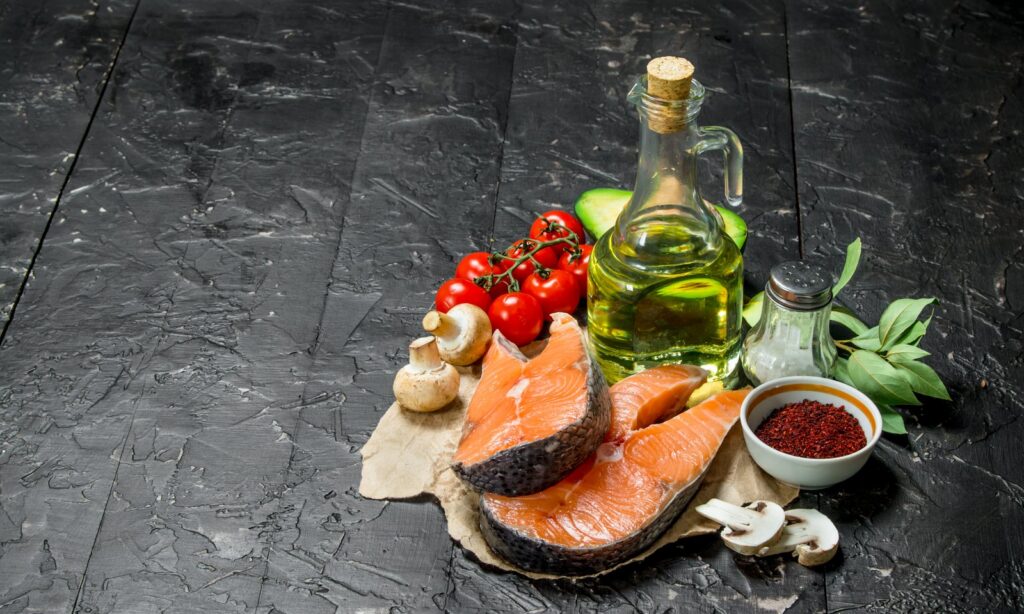
Large studies have linked Mediterranean-style eating with lower inflammation and fewer heart attacks and strokes. Focus on:
- Vegetables, fruit, legumes and whole grains
- Extra-virgin olive oil, nuts and seeds
- Oily fish like salmon, sardines and mackerel, rich in omega-3 fats
- Herbs and spices
- Plenty of fibre to feed a healthy gut microbiome
Cut back on sugary drinks, refined carbohydrates, processed meats and ultra-processed foods.
Move every day and lift weights
Regular aerobic exercise and strength training both lower inflammatory markers over time. Building muscle is one of the best long-term anti-inflammatory strategies there is.
Reduce visceral fat
Even modest weight loss, especially from around the middle, can significantly lower CRP and other markers.
Protect your sleep
Short or disrupted sleep raises inflammation. Aim for seven to nine hours, and get assessed for sleep apnea if you snore, wake unrefreshed or feel tired despite enough time in bed.
Don’t smoke, and limit alcohol
Look after your teeth and gums
Gum disease is a source of chronic inflammation linked with heart disease and diabetes. Regular dental care matters.
Manage stress and stay connected
Chronic stress and loneliness are both linked with higher inflammation. Practices such as mindfulness, time in nature and strong social connections help.
Address hormones and metabolic health
Treating insulin resistance, supporting women through menopause, and addressing genuinely low testosterone in men can all help reduce inflammatory load.
Find out how hot your fire is burning
Inflammaging is silent, but it’s measurable, and it’s modifiable. Book an assessment with our team. We’ll check your inflammatory and metabolic markers, look at the bigger picture, and build a personalized plan to help you age with energy and strength.
Sources
- Franceschi C, et al. Inflamm-aging: an evolutionary perspective on immunosenescence. Ann N Y Acad Sci. 2000;908:244-254.
- Franceschi C, et al. Inflammaging: a new immune-metabolic viewpoint for age-related diseases. Nat Rev Endocrinol. 2018;14(10):576-590.
- Furman D, et al. Chronic inflammation in the etiology of disease across the life span. Nat Med. 2019;25(12):1822-1832.
- Pearson TA, et al. Markers of inflammation and cardiovascular disease: application to clinical and public health practice. A statement for healthcare professionals from the CDC and the AHA. Circulation. 2003;107(3):499-511.
- Ridker PM, et al. Antiinflammatory therapy with canakinumab for atherosclerotic disease (CANTOS). N Engl J Med. 2017;377(12):1119-1131.
- Estruch R, et al. Primary prevention of cardiovascular disease with a Mediterranean diet supplemented with extra-virgin olive oil or nuts (PREDIMED). N Engl J Med. 2018;378(25):e34.
- López-Otín C, et al. Hallmarks of aging: an expanding universe. Cell. 2023;186(2):243-278.
This article is for general education and isn’t a substitute for personal medical advice. Please speak with a qualified clinician before starting any new medication or supplement.