If there were a single medication that improved blood sugar, strengthened bones, lifted mood, protected the heart, reduced the risk of falls and helped you stay independent into your 80s and 90s, everyone would be taking it.
That “medication” exists. It’s muscle, and the way to get it is strength training.
Table of Contents
Muscle is more than strength
We often think of muscle as something for athletes or for looking good. In reality, it’s one of the most important organs for long-term health.
- Metabolism. Muscle is the body’s largest destination for blood sugar after a meal. More muscle means better insulin sensitivity and lower diabetes risk.
- Bones. Muscles pull on bones when they contract, signalling them to stay strong and dense.
- Heart health. Strength training lowers blood pressure, improves cholesterol and reduces visceral fat.
- Brain and mood. Working muscles release signalling molecules, sometimes called myokines, that influence inflammation, mood and brain health. Resistance training reduces symptoms of depression and anxiety.
- Resilience. Muscle is a protein reserve your body draws on during illness, surgery or hospital stays. People with more muscle recover better.
- Independence. Getting up from a chair, carrying groceries, climbing stairs and catching yourself when you trip all depend on muscle.
We lose it if we don’t use it
From around our 30s, we begin to lose muscle mass, at an estimated 3 to 8% per decade, with the decline speeding up after 60. Strength and power fall even faster than size. Severe, age-related muscle loss is called sarcopenia, and it’s a major driver of frailty, falls, fractures and loss of independence.
For women, the menopause transition accelerates both muscle and bone loss. For men, falling testosterone can contribute too. Inactivity, illness, poor sleep, insulin resistance and low protein intake all make it worse.
The encouraging part: muscle responds to training at any age. Studies of people in their 80s and 90s have shown meaningful gains in strength and function with resistance exercise.
Strength predicts how long, and how well, you live
- In a study of nearly 140,000 adults across 17 countries, lower grip strength was a stronger predictor of death from any cause and from heart disease than blood pressure.
- A large 2022 review found that doing muscle-strengthening activities for 30 to 60 minutes a week was linked with a 10 to 20% lower risk of death from all causes, heart disease and cancer, with the greatest benefit when combined with aerobic exercise.
- In postmenopausal women with low bone mass, a supervised high-intensity resistance training program improved bone density and physical function, and was safe.
How much do you need?
Current guidelines recommend muscle-strengthening activity at least two days a week, working all the major muscle groups, along with regular aerobic activity.
You don’t need hours in the gym. Two or three sessions of 30 to 45 minutes can make a big difference.
What counts
- Free weights such as dumbbells and kettlebells
- Weight machines
- Resistance bands
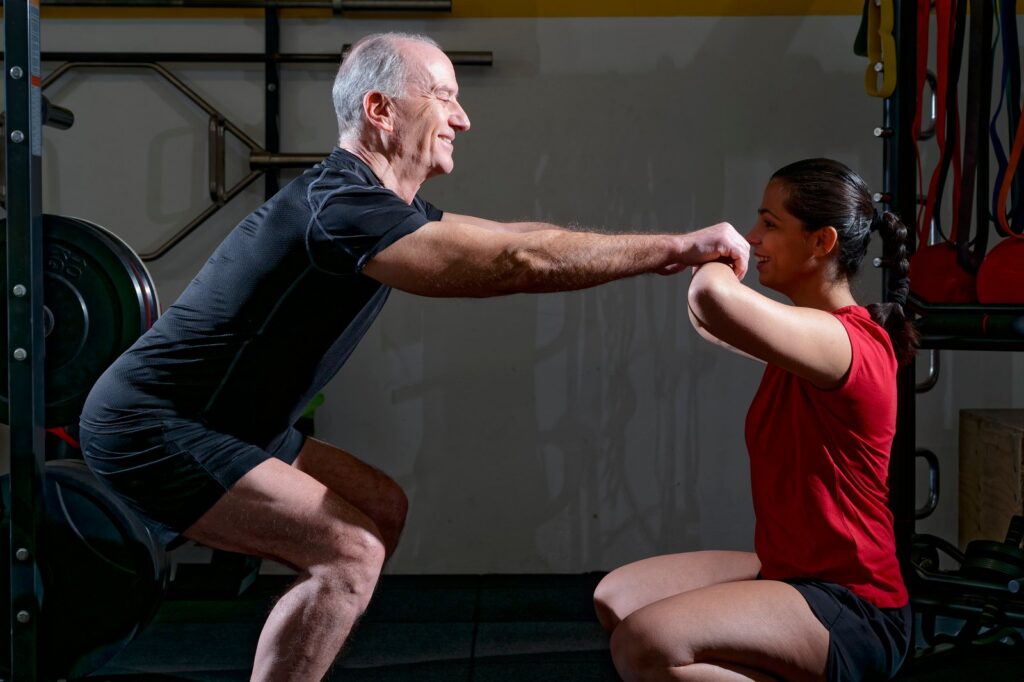
- Bodyweight exercises such as squats, push-ups, lunges and step-ups
- Pilates and some forms of yoga, though they generally need to be progressively challenging to build significant strength
Principles that matter
- Focus on big movements. Squats, hinges (like deadlifts), pushes, pulls, lunges and carries work many muscles at once and mirror everyday life.
- Challenge yourself. The last few repetitions of each set should feel hard. If you could easily do many more, it’s time for more weight or resistance.
- Progress gradually. Slowly increase the weight, repetitions or difficulty over weeks and months.
- Prioritize good form. A few sessions with a qualified trainer or physiotherapist can be a great investment, especially if you’re new or managing an injury.
- Be consistent. Results build over months and years. The best program is the one you’ll keep doing.
Fuel your muscle
Training is the signal. Protein is the building material. Older adults need more protein than younger adults to maintain and build muscle. Expert groups suggest at least 1.0 to 1.2 grams of protein per kilogram of body weight per day for healthy older adults, and more for those who are active or recovering from illness.
Practical tips:
- Spread protein across meals, aiming for roughly 25 to 40 grams at each
- Include high-quality sources such as eggs, dairy or Greek yogurt, fish, poultry, lean meat, tofu, tempeh and legumes
- Consider a protein shake if you struggle to get enough from food
Sleep, vitamin D, and healthy hormone levels all support muscle too. If you have kidney disease, check with your clinician about the right protein target for you.
Getting started safely
Strength training is safe and beneficial for most people, including those with high blood pressure, diabetes, arthritis and osteoporosis, when it’s done appropriately. If you have heart disease, uncontrolled blood pressure, recent surgery, significant joint problems or are new to exercise, talk with a clinician first so your program can be tailored to you.
Invest in your future self
Every session you do now is an investment in the person you’ll be at 70, 80 and beyond. Book an assessment with our team. We can look at your body composition, metabolic health, hormones and bone health, and help you build a realistic plan to stay strong for life.
Sources
- Volpi E, Nazemi R, Fujita S. Muscle tissue changes with aging. Curr Opin Clin Nutr Metab Care. 2004;7(4):405-410.
- Cruz-Jentoft AJ, et al. Sarcopenia: revised European consensus on definition and diagnosis. Age Ageing. 2019;48(1):16-31.
- Leong DP, et al. Prognostic value of grip strength: findings from the Prospective Urban Rural Epidemiology (PURE) study. Lancet. 2015;386(9990):266-273.
- Momma H, et al. Muscle-strengthening activities are associated with lower risk and mortality in major non-communicable diseases. Br J Sports Med. 2022;56(13):755-763.
- Watson SL, et al. High-intensity resistance and impact training improves bone mineral density and physical function in postmenopausal women with osteopenia and osteoporosis: the LIFTMOR randomized controlled trial. J Bone Miner Res. 2018;33(2):211-220.
- Fiatarone MA, et al. High-intensity strength training in nonagenarians. JAMA. 1990;263(22):3029-3034.
- Bauer J, et al. Evidence-based recommendations for optimal dietary protein intake in older people: a position paper from the PROT-AGE Study Group. J Am Med Dir Assoc. 2013;14(8):542-559.
- US Department of Health and Human Services. Physical Activity Guidelines for Americans, 2nd edition, 2018.
This article is for general education and isn’t a substitute for personal medical advice. Please check with a qualified clinician before starting a new exercise program if you have a medical condition.